Call Now : (804) 432-3255

Blog

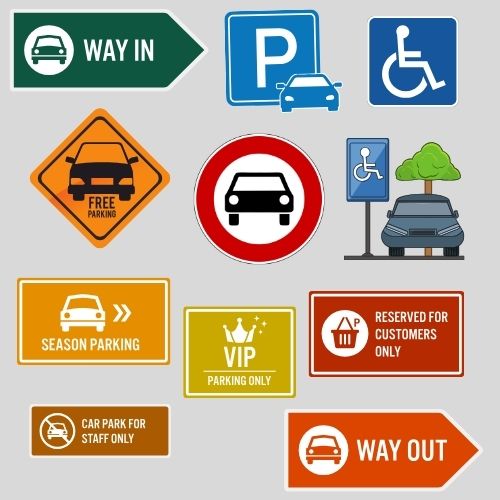
In the intricate ecosystem of a parking lot, signage plays a significant role in maintaining order, safety, and efficiency. From directing traffic flow to ensuring pedestrian safety and designating specific parking areas, the types of parking space signs utilized are diverse and essential. The signs for parking lots act as silent sentinels, guiding users seamlessly through their journey while enforcing rules and regulations for a harmonious parking experience.

At CVA Line Striping LLC, we are here to explore the various types of parking space signs. It becomes clear that each sign, whether it warns, informs, or directs, is significant for the overall functionality and safety of the parking area. This exploration will highlight the necessity of these signs and their impact on a parking lot’s daily operations, underscoring their significance in creating a well-organized and user-friendly environment.

The Types of Parking Space Signs You Should Look

From designating specific areas for different types of vehicles to informing drivers of parking time limits, the types of parking space signs you choose can significantly impact the functionality and accessibility of your parking lot. Here, understanding these various types of parking lot signage benefits both parking lot operators and users, enhancing the overall user experience, promoting safety, and minimizing the risk of parking violations and accidents.

Sign 1: Handicap Parking Signs

Accessible parking signs are pivotal in ensuring accessibility and convenience for individuals with disabilities. These signs represent a commitment to inclusivity and equal opportunity for all, irrespective of physical mobility. By designating specific parking spots close to entrances and facilities, handicap sign parking helps reduce the distance individuals with disabilities have to navigate to reach their destination. Moreover, handicap parking space sign is legal compliance under the Americans with Disabilities Act (ADA), emphasizing the importance of these signs in compliance.

Sign 2: No Parking Signs

No parking space signs are strategically placed to prevent vehicles from obstructing traffic flow, access to emergency services, and entrances or exits of buildings. By clear parking space sign, where parking is prohibited, these signs help avoid congestion and ensure that areas designated for specific purposes, such as fire lanes or loading zones, remain accessible at all times. Implementing and adhering to these regulations promotes a smoother, more efficient use of parking facilities and roadways, making them safer and more user-friendly for everyone.

Sign 3: Reserved Parking Signs

Reserved parking signs manage parking lots by designating specific spaces for groups or individuals. These signs ensure that spaces are available for those who need them most, such as disabled individuals, expectant mothers, or VIP guests, enhancing accessibility and convenience. By clearly marking custom parking signs, they help maintain order, prevent unauthorized parking, and improve the overall efficiency of space usage. Implementing these signs communicates the parking lot’s policies and demonstrates an organization’s commitment to meeting the diverse needs of its community.

Sign 4: Directional Signs

Directional signs are essential to efficiency and user-friendliness, guiding drivers and pedestrians and ensuring smooth navigation through the area. By clearly indicating entrances, exits, pedestrian crossings, and specific zones like handicap or EV charging stations, these signs or parking lots help minimize confusion and improve the overall traffic flow. They contribute to safety by reducing the likelihood of accidents and enhancing the customer experience. Parking lot that is easy to navigate leaves a positive impression, encouraging visitors to return. Incorporating well-placed, easy-to-understand parking lot directional signs is critical to effective parking lot design and management.

Sign 5: Stop Signs

Stop signs serve as visual cues that command drivers to come to a complete halt, ensuring that pedestrians can safely cross and vehicles navigate the area without conflict. Strategically placed stop signs help prevent accidents by controlling traffic flow, particularly at intersections or points with limited visibility. For the parking lot signs for business and property managers, installing visible stop signs is more than about compliance with traffic regulations; it’s about prioritizing the safety of all who use the parking lot. By doing so, they can reduce the risk of collisions, enhance the overall efficiency of the parking area, and ensure a safer environment for all.

Sign 6: Pedestrian Crossing Signs
parking lot signs

Pedestrian crossing signs are crucial visible indicators that alert drivers to areas where pedestrians may be crossing, ensuring that drivers and walkers are aware of potential interactions. Moreover, pedestrian crossing signs help enforce right-of-way rules, making parking lots more orderly and efficient. Their presence is not just a safety measure but also a reflection of a business or property’s commitment to the well-being of its visitors and customers. Implementing and maintaining clear pedestrian crossing signs is a straightforward yet effective way to improve the functionality and security of any parking area.

Sign 7: Fire Lane Signs

Fire lane signs are a critical component, serving the dual purpose of ensuring unobstructed access for emergency vehicles and enhancing the overall safety of the premises. These signs for parking lots are strategically placed to designate areas where parking is strictly prohibited to maintain clear pathways for fire trucks, ambulances, and other emergency services. By clearly marking fire lanes, property owners adhere to legal requirements and prioritize the safety of all visitors and occupants. It is also a reminder of the importance of emergency preparedness and the role that well-thought-out parking lot planning plays in safeguarding people and property.

Sign 8: Speed Limit Signs

Speed limit signs within a parking lot are crucial in maintaining safety and order. These signs for parking lots help regulate the speed of vehicles, ensuring that drivers move at a pace that allows for the safety of pedestrians and other cars alike. By setting a clear speed limit, typically lower than that on surrounding roads, these signs contribute to a safer environment, minimizing the risks of accidents and collisions. Moreover, speed limit signs are:

  • An essential aspect of compliance with local regulations.
  • Helping property owners avoid legal issues and promote a responsible image.
  • Enhancing the overall experience for everyone who uses the parking lot.

Sign 9: Electric Vehicle Charging Station Signs

With the rising favor of electric vehicles (EVs), incorporating Electric Vehicle Charging Station signs into your parking lot striping service offers a forward-thinking approach to modern transportation needs. Furthermore, these signs can enhance the attractiveness of your facility to EV drivers, increasing foot traffic and customer loyalty. Integrating EV charging station signs demonstrates a proactive stance on environmental responsibility and positions your business as a leader in accommodating the evolving landscape of automotive technology.

Sign 10: Visitor Parking Signs

Visitor parking signs are crucial in welcoming and directing guests to designated parking areas, ensuring a smooth and positive first impression for those visiting your premises. Marking spaces allocated for visitors, businesses, and organizations promotes a sense of organization and thoughtfulness when guests arrive. These signs for parking lots help manage parking lot traffic efficiently and demonstrate a commitment to hospitality and customer care. Additionally, well-placed visitor parking signs can aid in maximizing space utilization by guiding visitors away from restricted or employee parking areas, further enhancing the overall efficiency and user experience of the parking facility.

Final Words

Before wrapping up, we learned about parking lot signs, types of parking space signs, and how they are crucial for keeping parking lot signage standards intact. Furthermore, for businesses and property owners, investing in the right mix of high-quality, visible signs is a regulatory compliance matter and a reflection of their commitment to providing a positive and secure experience. Ultimately, the thoughtful implementation of parking lot signs significantly contributes to minimizing confusion, accidents, and liabilities, making it an indispensable aspect of parking lot design and maintenance.

To ensure your parking area meets these vital standards and showcases your dedication to safety and compliance, partnering with professionals experienced in parking lot sign installation can significantly enhance both the functionality and the experience for users, seamlessly aligning with your business’s commitment to excellence.
What are the Types of Signs Needed in Parking Lots?

Parking lot striping plays a pivotal role in ensuring the orderly flow of traffic, enhancing safety for drivers and pedestrians, and maximizing space utilization. However, your parking lot striping standards must adhere to specific guidelines.
Here, we will delve into what makes for standard parking space dimensions, covering the gamut from legal requirements, such as ADA compliance, to the choice of materials. We’ll explore how these standards apply to different types of parking lots, from small retail complexes to large public spaces, and why adhering to these guidelines is critical for compliance and creating welcoming and user-friendly environments.
Join CVA Line Striping as we navigate the world of parking lot striping standards and discover how these guidelines contribute to safer, more efficient, and more accessible parking areas.

List of Topmost Standard Parking Space Dimensions

Before directly jumping into the list of the standards, it’s necessary to know that the parking lot striping standards are not arbitrary; they are carefully considered to balance the efficient use of space with the ease of parking for drivers. In this section, we will explore the list of topmost standard parking space dimensions, providing a foundational guide for those looking to design or optimize parking facilities.

Compliance with ADA Guidelines

Compliance with the Americans with Disabilities Act (ADA) guidelines is crucial for parking lot striping services, as it ensures that parking facilities are accessible and usable for individuals with disabilities. ADA guidelines specify the accessible parking space spaces, including van-accessible spaces and dimensions of these spaces to accommodate vehicles of various sizes, including those that require additional space for wheelchair lifts or ramps. Adhering to ada parking lot striping standards in parking lot striping ensures legal compliance and demonstrates a commitment to inclusivity and accessibility.

Visibility and Material Use

The effectiveness of parking lot striping hinges on parking lot striping color standards, which, in turn, depends on the materials used. Thermoplastic, paint, and reflective tapes are commonly used for durability and visibility. Thermoplastic, for instance, is known for its longevity and reflective properties, making it an excellent choice for high-traffic areas. Paint, infused with reflective beads, offers a cost-effective solution with good visibility. Reflective tapes provide an immediate high-visibility option that can be quickly applied and replaced as needed. The professional application of these materials ensures that the stripes are straight, uniform, and meet regulatory standards.

Spacing and Size Specifications

When it comes to parking lot striping, adhering to precise spacing and size specifications is crucial for optimizing the functionality and safety of the space. These specifications are designed to accommodate a variety of vehicles, ensure smooth traffic flow, and provide sufficient room for drivers and pedestrians to move safely. Adhering to accessible parking spaces:

[table id=2 /]

Fire Lane and Emergency Access

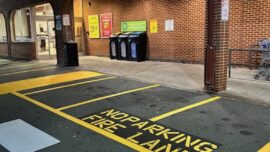
Ensuring clear fire lanes and emergency access in parking lots is regulatory compliance and a critical aspect of public safety and property protection. Fire lanes are designated areas marked with visible signs and striping to deter parking or blocking by vehicles and other obstacles. It is essential to ensure striping standards for parking lots that these critical pathways remain clear and accessible, while the obstructions also result in significant fines and legal liabilities for property owners. Hence, prioritizing the visibility and accessibility of fire lanes and emergency access is fundamental to building safety and emergency preparedness.

Traffic Flow Design

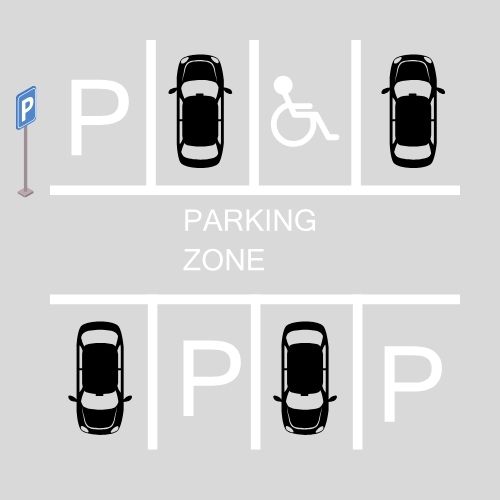
Parking lot dimesion

By incorporating clear, strategically placed markings, directional arrows, and signage, parking lots can significantly improve the overall efficiency of vehicle movement. This planning enhances safety by reducing the potential for accidents and contributes to a more positive user experience. Drivers are guided smoothly from entry to the parking space and back to the exit, minimizing the risk of bottlenecks and enhancing the functionality of the space. Investing in a professional traffic flow design is not just about adhering to standards; it’s about creating an orderly environment that efficiently serves all users’ needs.

Crosswalks and Pedestrian Safety

Crosswalks are crucial in enhancing pedestrian safety in parking lots and urban environments. They serve as designated zones where pedestrians can safely cross, guiding them away from moving vehicles and reducing the risk of accidents. Properly marked and visible crosswalks are essential for alerting drivers to areas of potential pedestrian traffic, prompting them to slow down and proceed with caution. By prioritizing pedestrian pathways and marking crosswalks, businesses, and municipalities can significantly improve the safety and well-being of all individuals navigating these spaces, fostering a more pedestrian-friendly environment.

Maintenance and Upkeep

Regular maintenance and upkeep of your standard parking space dimensions extends its lifespan and ensures it remains safe and visually appealing. It involves not just the periodic reapplication of striping but also attending to cracks, potholes, and other forms of wear and tear that can occur over time. Additionally, a well-maintained parking lot reflects positively on the image of the business or facility, indicating a commitment to quality and safety. Engaging in routine maintenance activities, such as cleaning, seal coating, and prompt repairs, safeguards your investment and contributes to a positive impression among users.

Signage and Information

Effective signage and information dissemination serve as crucial parking lot management, which is a silent guide for both drivers and pedestrians. Clear, visible signs direct traffic flow, enhancing safety and efficiency and communicating important information such as parking rules, hours of operation, and emergency contact details. Proper signage dimensions of typical parking space is about making spaces accessible and navigable for everyone, ensuring a seamless and positive experience from the moment someone enters the lot. According to American National Standards following is a comprehensive collection of standards guiding the design, evaluation, and use of safety signs, colors, and symbols intended to prevent personal injury by visually alerting people to potential hazards:

ANSI/NEMA Z535.1-2006 (R2011), Safety colors

This ANS establishes technical definitions, color standards, and color tolerances for the ANSI Z535 safety colors.

ANSI Z535.2-2011, Environmental and facility safety signs

This standard guides the design, application, and use of safety signs in facilities and in the environment through consistent visual layout. Reorganized to more clearly describe the five types of safety signs used in facilities, the 2011 edition has also been updated to better harmonize with other parts of the ANSI Z535 series.

ANSI/NEMA Z535.3-2011, Criteria for safety symbols

This document provides general criteria for the design, evaluation, and use of safety symbols to identify and warn against specific hazards, and to provide information to avoid personal injury.

ANSI/NEMA Z535.4-2011, Product safety signs and labels

ANSI/NEMA Z535.4-2011 establishes performance requirements for the design, application, use, and placement of safety signs and labels on a wide variety of products. Revisions to the standard include a new product safety sign, as well as updated definitions to more clearly delineate a separation between physical injury and other safety-related issues.

ANSI/NEMA Z535.5-2011, Safety tags and barricade tapes (for temporary hazards)

This ANS covers the design, application, and use of safety tags and barricade tapes for temporary hazards.

ANSI/NEMA Z535.6-2011, Product safety information in product manuals, instructions, and other collateral materials

ANSI/NEMA Z535.6 lays out requirements for the clear and consistent communication of safety information for a wide array of products. Specifically, the standard addresses collateral information, which includes printed or electronic documents that accompany a product in the form of owner’s manuals, maintenance instructions, assembly instructions, and user guides. ANSI Z535.6-2006 seeks to establish a uniform layout to ensure that important safety information will be communicated effectively and consistently with other safety signs and labels that might also be in use.

ANSI/NEMA Z535-2011, Safety color chart

The safety color chart includes updated and corrected information on ink specifications for the Z535 safety colors.

ANSI/NEMA Z535 SET

This comprehensive collection includes all six parts and the color chart.

Loading Zones and Special Areas

Designating typical parking spot dimensions for loading and unloading is crucial for maintaining efficient operations, especially for businesses that receive regular shipments or have high customer turnover. Properly marked loading zones ensure delivery vehicles have clear, dedicated parking spaces, reducing congestion and minimizing disruptions to traffic flow. These strategically placed zones streamline loading and unloading goods and enhance safety by keeping heavy and potentially hazardous vehicle movements away from pedestrian areas.

Local Regulations and Codes

Navigating the maze of local regulations and codes is vital before undertaking any parking lot striping project. Each municipality may have its own set of guidelines dictating dimensions of typical parking space and requirements for handicapped-accessible parking, among others. Compliance with these regulations ensures not only the legality of the parking layout but also its functionality and safety for users. Businesses and property owners are advised to consult with local planning departments or engage professional striping services familiar with the regional codes to guarantee their parking lots meet all legal standards, thereby avoiding potential fines and rework.

Outcome

Now, talking about the outcome of investing in following parking lot striping guidelines for standard parking space dimensions extends beyond mere aesthetic enhancement; it is a strategic move towards improving safety, maximizing space utilization, and boosting overall property value. Moreover, the visual appeal of a freshly striped parking lot creates a positive first impression on customers, potentially increasing foot traffic and, by extension, business revenue. Regular maintenance and re-striping protect the property owner from potential liabilities and are cost-effective solutions to prolong the parking lot’s lifespan. Ultimately, employing parking lot striping services results in a safer, more efficient, and aesthetically pleasing environment for all users, underscoring the importance of such an investment in today’s competitive business landscape.

The Ultimate Guide to: Parking Lot Striping Standards